
Walking is the most repeated thing your body does. That's exactly why it matters more than most people think: a small imbalance in your walk gets multiplied thousands of times a day, every day, for years.
It's also the reason a walking pattern can quietly undo good work. You can stretch, strengthen and correct — then walk on the same faulty pattern for 10,000 steps and hand most of it back.
The good news is you only need your phone.
Setting it up (2 minutes)
- Find a hallway or open space with about 20 feet of clear runway.
- Prop your phone up, or better, have someone hold it. Film from in front, then from behind.
- Walk to the end and back a few times, not just once.
- Wear what you normally wear — including your usual shoes.
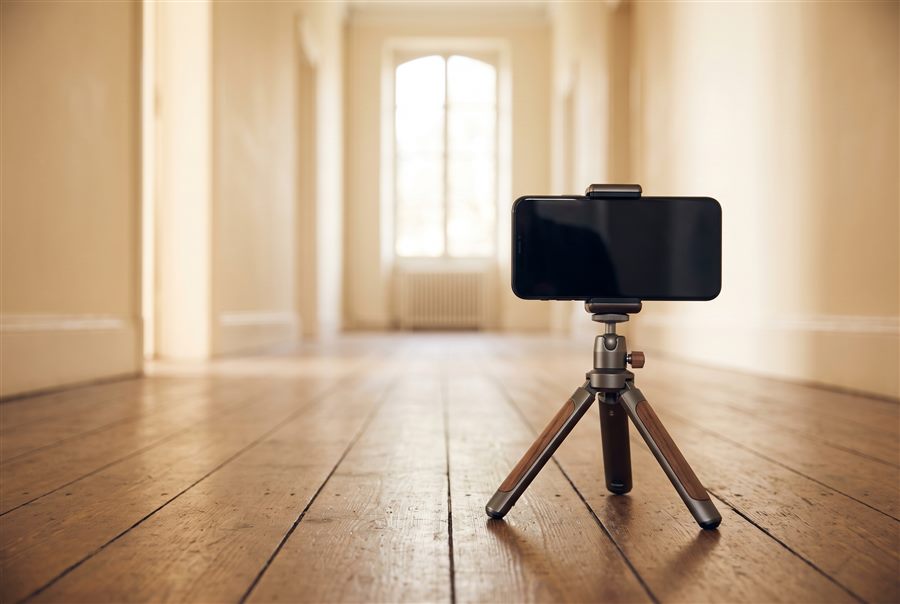
The trick most people miss: the moment you think about walking, you stop walking normally. So count backwards from 100 out loud while you walk, or have a conversation. Give your brain a job and your natural pattern comes back.
Arm swing — watch your hands
Play the video back and watch only your arms. Is one arm swinging noticeably more than the other? Is one staying tucked closer to your body?
Your arms work as counterweights to your hips. When your pelvis rotates evenly, your arms swing evenly. So an uneven arm swing usually isn't an arm problem at all — it's telling you something about how your pelvis and mid-back are rotating.
Before you read too much into it: check whether you habitually carry a bag, purse or laptop on that side. Sometimes the answer really is that simple.
Foot turnout — watch your toes
Now watch just your feet, filmed from the front. Does one foot point outward more than the other?
Some turnout is normal. What matters is asymmetry — one foot noticeably more turned out than its partner.
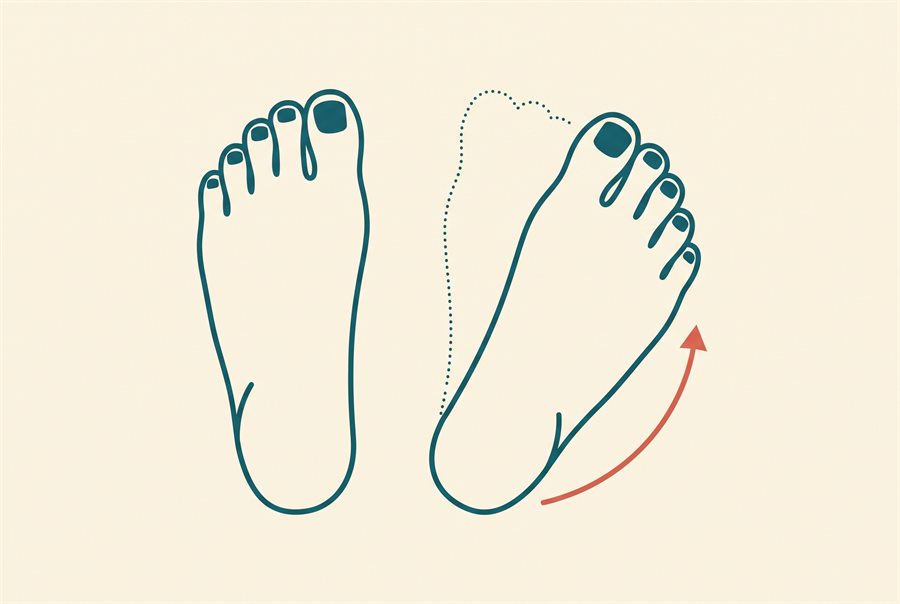
This is one of the most common patterns I see, and it's usually protective. Turning a foot outward widens your base and makes that leg feel more stable. Bodies do this around an old injury, a surgery, or a joint that doesn't feel trustworthy.
The part that catches people off guard: it often long outlives the injury that caused it. An ankle you sprained in your twenties can still be steering how you walk decades later, well after it stopped hurting.
Step length — watch the gap
Film from the side if you can, and watch how far each foot travels. Is one step shorter than the other?
A shortened step on one side usually means the body is quietly limiting how much load goes through that leg — or how far that hip is willing to extend.
Short, choppy steps on both sides are worth noting too. Long strides ask your glutes and core to do real work; short ones let them switch off. It's a very common pattern in people with ongoing back pain.
Two bonus checks
The sound test
This one needs no video. Just listen while you walk — and especially while you run.
Quieter is better. A loud, heavy, slapping landing means force is being absorbed by joints and bone rather than controlled by muscle. Try to make your footfall quieter and you'll usually feel the right muscles switch on immediately.
The second-opinion test
Ask someone who knows you well: "Does anything look off when I walk?"
People close to you often notice a limp, a hitch or a lean long before you do — because you can't see your own walk, and you change it the second you pay attention to it.
Now the important part.
If you found something, resist the urge to fix it directly. Consciously forcing a foot straight or a longer stride doesn't correct the underlying reason — it just adds effort on top of a compensation, and it rarely holds once you stop thinking about it.
A compensation is your body's solution to a problem, not the problem itself. Take the solution away without addressing the cause, and the body will simply find another compensation.
See checks 2 & 3, plus 2 bonus tests — free
Check 2 is the pattern I see most often, and it usually outlives the injury that caused it. Enter your email to unlock the rest.
What this test can and can't do: it's very good at showing you that something is asymmetrical. It cannot tell you why. A turned-out right foot could be coming from the foot itself, the ankle, the hip, the pelvis, an old injury, or the shoes you're standing in. Those all look similar on video and need completely different corrections.
Find out what's actually driving it
The 90-minute head-to-toe assessment tests the whole chain — foot, ankle, knee, hip, back — with hands-on muscle and movement testing. You leave knowing what's causing the pattern, and the plan to correct it. Then we re-test, so progress is something you can see on paper, not just feel.
Bring your video if you filmed one — and the shoes you wear most.
About the method: Nadeem Tejani is a NASM Certified Personal Trainer and Corrective Exercise Specialist in Scarborough, Ontario. His assessment approach comes from advanced clinical training in exercise therapy, refined over thousands of clinical hours - combined with his own hands-on work with clients in Scarborough.
This guide is general education, not a diagnosis or medical advice. A change in how you walk can occasionally reflect a medical condition that needs a doctor. If your walking has changed noticeably without an obvious reason, or you have numbness, weakness, dizziness, loss of balance, or loss of bladder or bowel control, please see a physician.